

The global logistics ecosystem is becoming more complex with each passing year. Cargo movement today involves multiple stakeholders working across ports, airports, inland depots, customs offices, and transportation networks. When these stakeholders operate independently, inefficiencies, delays, and communication gaps are inevitable.
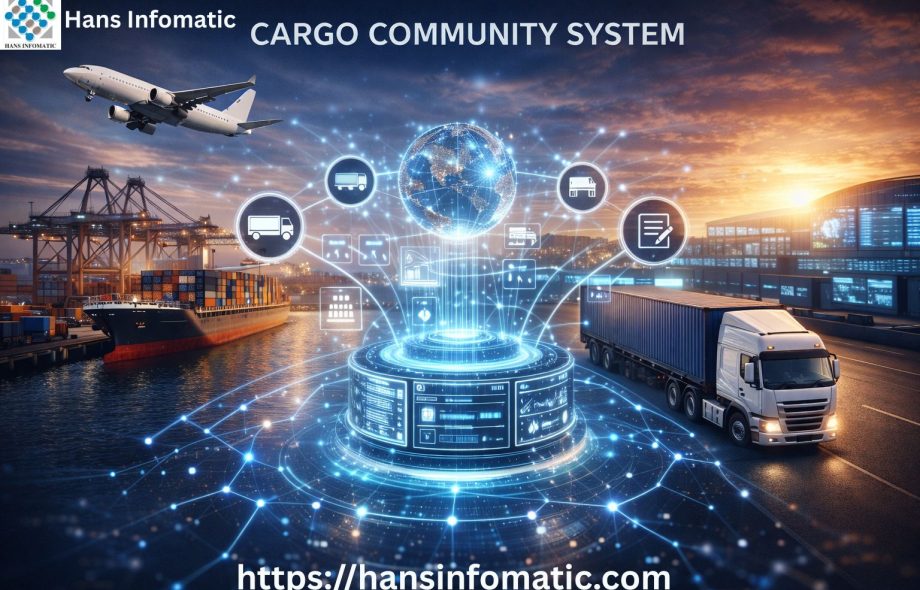
To address these challenges, logistics hubs worldwide are adopting a cargo community system (CCS)—a digital platform designed to connect all cargo-related stakeholders into a single collaborative environment. By enabling real-time information sharing and standardized workflows, a cargo community system is reshaping how cargo is managed and moved across supply chains.
What Is a Cargo Community System?
A cargo community system is an integrated digital platform that allows different logistics stakeholders to exchange cargo-related information electronically. Instead of relying on manual communication, phone calls, or emails, all participants access and update data through a shared system.
The goal of a cargo community system is to improve coordination, transparency, and efficiency across the cargo lifecycle—from arrival and clearance to storage and final delivery.
The Growing Need for Cargo Community Systems
As trade volumes increase, traditional coordination methods struggle to keep up. Manual processes often result in duplicated work, inconsistent data, and slow decision-making.
Without a cargo community system, logistics ecosystems commonly face:
Poor visibility of cargo status
Delays caused by incomplete information
Repetitive data entry across organizations
Inefficient use of infrastructure
Higher operational costs
A cargo community system addresses these challenges by creating a shared digital environment where all stakeholders operate with the same real-time information.
Key Participants in a Cargo Community System
One of the main strengths of a cargo community system is its ability to connect diverse stakeholders who depend on each other for smooth cargo movement. These typically include:
Freight forwarders
Customs authorities and regulatory agencies
Port and terminal operators
Shipping lines and airlines
Transporters and trucking companies
Warehousing and container freight stations
By connecting these participants digitally, a cargo community system eliminates silos and improves coordination across the logistics chain.
How Cargo Community Systems Improve Operational Efficiency
Operational inefficiency often stems from fragmented communication. When each stakeholder works on separate systems, delays and misunderstandings are common.
A cargo community system streamlines operations by:
Standardizing data formats
Enabling instant data sharing
Reducing paperwork and manual handling
Minimizing redundant tasks
This leads to faster cargo processing, improved planning, and better utilization of logistics infrastructure.
Enhancing Visibility Across Cargo Movements
Visibility is a major challenge in traditional logistics operations. Stakeholders often lack timely updates on cargo arrival, clearance, or release status.
With a cargo community system, all participants gain real-time visibility into cargo movements and milestones. This allows:
Better planning of transport and storage
Early identification of delays
Proactive issue resolution
Transparent communication with customers
Improved visibility helps logistics ecosystems operate more predictably and efficiently.
Supporting Faster and More Accurate Customs Processes
Customs clearance is a critical stage in cargo movement. Delays often occur due to incomplete documentation or inconsistent data submitted by different parties.
A cargo community system helps standardize and digitize data shared with customs authorities. By ensuring consistency and accuracy, the system supports faster processing and reduces compliance risks.
Digital integration with regulatory systems also minimizes the need for manual follow-ups and physical document handling.
Reducing Congestion and Cargo Dwell Time
Congestion at ports and terminals is a major issue affecting global trade efficiency. Lack of coordination between stakeholders often leads to longer cargo dwell times and inefficient resource usage.
Cargo community systems improve coordination by providing advance visibility into cargo arrivals and clearance status. This enables better scheduling of transport, equipment, and labor.
Reduced congestion results in:
Faster cargo turnaround
Lower demurrage and storage costs
Improved infrastructure utilization
Cost Efficiency Through Digital Collaboration
Inefficiencies in logistics directly translate into higher costs. Delays, rework, and miscommunication increase expenses for all stakeholders involved.
A cargo community system reduces costs by:
Eliminating duplicate data entry
Reducing administrative overhead
Minimizing delays and penalties
Improving operational planning
Cost efficiency is a key driver behind the global adoption of cargo community systems.
Enabling Data-Driven Logistics Ecosystems
Beyond operational efficiency, a cargo community system generates valuable data that can be used for performance monitoring and planning.
Stakeholders can analyze metrics such as:
Cargo dwell time
Clearance duration
Throughput efficiency
Bottleneck identification
These insights support data-driven decision-making and continuous improvement across the logistics ecosystem.
The Role of Technology Providers in Cargo Community Systems
Building and maintaining a cargo community system requires advanced technology and deep domain expertise. Technology providers play a crucial role in designing platforms that are scalable, secure, and interoperable.
Companies like Hansinfomatic Pvt Ltd focus on developing intelligent logistics software that aligns with real-world operational needs. Their solutions are designed to integrate seamlessly with broader cargo ecosystems.
Platforms such as iCaffe complement cargo community systems by enabling freight forwarders to digitally connect with ports, customs, and transport partners, enhancing overall ecosystem efficiency.
Benefits for Freight Forwarders
Freight forwarders are among the biggest beneficiaries of cargo community systems. Instead of coordinating separately with each stakeholder, they gain access to a centralized source of information.
Benefits for freight forwarders include:
Faster cargo release
Reduced manual coordination
Improved shipment planning
Better customer communication
This allows forwarders to deliver more reliable and professional services.
Strengthening Collaboration Across the Supply Chain
Logistics is inherently collaborative. A cargo community system fosters collaboration by ensuring that all participants work with the same information.
This shared visibility reduces disputes, improves accountability, and strengthens relationships across the supply chain.
Strong collaboration is essential for building resilient logistics networks capable of handling disruptions.
Preparing for the Future of Digital Trade
Governments and trade bodies worldwide are promoting digital trade facilitation initiatives. Cargo community systems align perfectly with these goals by enabling paperless processes and faster cargo movement.
As supply chains become more digital, cargo community systems will play a central role in shaping the future of logistics and global trade.
Conclusion
A cargo community system is a foundational element of modern logistics ecosystems. By connecting stakeholders, improving visibility, supporting compliance, and reducing costs, it transforms how cargo is managed across ports, airports, and inland hubs.
Technology providers such as Hansinfomatic Pvt Ltd, along with advanced logistics platforms like iCaffe, are helping organizations move toward smarter, more connected cargo operations.
For logistics stakeholders aiming to improve efficiency and competitiveness, investing in a robust cargo community system is a strategic step toward long-term success.
Ready to transform your operations?
Visit https://hansinfomatic.com/ to book your free demo today.
 :
https://pin.it/3EkMVDhNf
:
https://pin.it/3EkMVDhNf