

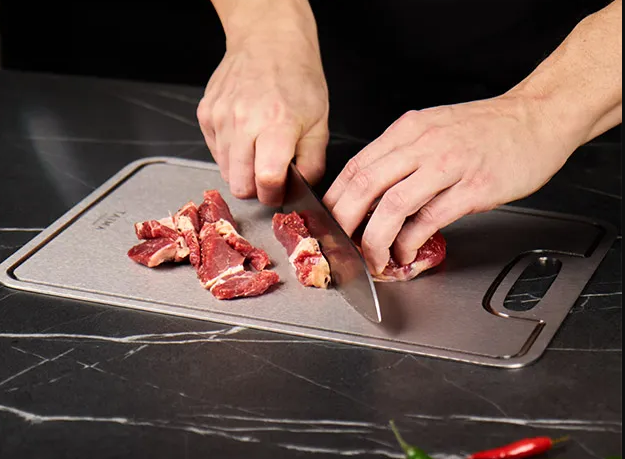
In the world of kitchen utensils, durable cutting boards are a staple for any serious chef or home cook. Recently, titanium cutting boards have gained popularity due to their exceptional performance and longevity. But what sets them apart from traditional options?
Titanium Cutting Board Dull Knife The unique titanium properties make these cutting boards stand out. Titanium is known for its high strength-to-weight ratio, corrosion resistance, and ability to withstand extreme temperatures. This makes titanium cutting boards an ideal choice for those seeking a reliable and long-lasting kitchen companion.
👉CLICK HERE TO BUY YOUR TITANIUM CUTTING BOARD THE WEBSITE AT MASSIVE DISCOUNT PRICE TODAY
Key Takeaways
- Titanium cutting boards offer superior durability compared to traditional materials.
- The unique properties of titanium make it resistant to corrosion and extreme temperatures.
- Titanium cutting boards are a worthwhile investment for serious chefs and home cooks.
The Material Science of Titanium
Understanding the material science behind titanium is crucial to appreciating its advantages in culinary settings. Titanium’s unique combination of properties makes it an ideal material for cutting boards.
Atomic Structure and Physical Properties
Titanium’s atomic structure is characterized by its high strength-to-weight ratio, attributed to its hexagonal close-packed crystal structure. This structure provides exceptional mechanical properties, including high tensile strength and low density. The physical properties of titanium, such as its high melting point and low thermal conductivity, further contribute to its durability and resistance to deformation.
Corrosion Resistance and Oxidation Behavior
Titanium exhibits outstanding corrosion resistance due to the formation of a stable oxide layer on its surface. This oxide layer, primarily composed of titanium dioxide (TiO2), protects the metal from further oxidation and corrosion. The corrosion resistance of titanium is particularly beneficial in kitchen environments, where exposure to acidic foods and cleaning agents is common.
| Property | Titanium | Stainless Steel |
| Density (g/cm3) | 4.5 | 8.0 |
| Tensile Strength (MPa) | 900 | 500 |
| Corrosion Resistance | Excellent | Good |
How Titanium Cutting Boards Are Manufactured
From extraction to finishing, the manufacturing of titanium cutting boards is a meticulous process that ensures the final product meets high standards of quality and durability. This process involves several key stages, each critical to producing a cutting board that is both functional and long-lasting.
Extraction and Processing Methods
Titanium Cutting Board Consumer Reports The journey begins with the extraction of titanium from its ores, primarily ilmenite and rutile. This process involves several steps, including mining, beneficiation, and the production of titanium dioxide or titanium sponge. The extracted titanium is then alloyed to enhance its properties, such as strength and corrosion resistance, making it suitable for use in cutting boards. The alloy is then processed into sheets or plates, which will eventually become the cutting boards.
Surface Treatment and Finishing Techniques
Once the titanium is processed into the desired form, it undergoes surface treatment and finishing techniques to enhance its performance. This may include grinding and polishing to achieve a smooth surface that is gentle on knives while being resistant to scratches and corrosion. Some manufacturers also apply additional coatings or treatments to further improve the cutting board’s durability and hygiene. The result is a cutting board that is not only durable but also safe for food preparation.
Titanium Cutting Boards vs. Traditional Materials
In the world of culinary arts, the cutting board is a staple, and titanium is making waves as a superior alternative to traditional options. When evaluating cutting boards, several factors come into play, including durability, hygiene, and the impact on knife longevity.
Wood: Porosity and Bacterial Growth Concerns
Wooden cutting boards, while aesthetically pleasing, pose concerns due to their porosity. This characteristic can lead to bacterial growth, as bacteria can lodge in the wood’s pores, potentially contaminating food. Regular maintenance is crucial to mitigate this risk, but even with proper care, wood remains a more hospitable environment for bacteria compared to non-porous materials like titanium.
Plastic: Durability and Microplastic Issues
Plastic cutting boards are another common choice, but they have their drawbacks. They can be prone to scratches, which may harbor bacteria, and their durability is generally lower than that of titanium. Moreover, there’s growing concern about microplastics shedding from these boards into food. In contrast, titanium cutting boards are durable and free from such risks.
Glass and Stone: Impact on Knife Edges
Glass and stone cutting boards are known for their hardness, which can be detrimental to knife edges. The constant chopping action can quickly dull knives, making them less effective. Titanium, being hard yet gentle on knives, offers a more balanced solution.
👉CLICK HERE TO BUY YOUR TITANIUM CUTTING BOARD THE WEBSITE AT MASSIVE DISCOUNT PRICE TODAY
Stainless Steel: The Closest Competitor
Stainless steel cutting boards are often considered the closest competitor to titanium. While they are durable and resistant to corrosion, they can still be noisy and may cause knives to dull faster than titanium. Titanium’s unique blend of strength, lightness, and knife-friendliness sets it apart.
The Microbiology of Food Preparation Surfaces
Understanding the microbiology of food preparation surfaces is essential for preventing bacterial contamination. Kitchen hygiene is a critical aspect of food safety, and the surfaces on which food is prepared play a significant role in maintaining or compromising this hygiene.
Bacterial Adhesion Studies on Different Materials
Titanium Cutting Board Research has shown that different materials used for cutting boards have varying levels of bacterial adhesion. For instance, studies comparing plastic, wood, and metal cutting boards have found that wooden cutting boards tend to have a higher risk of bacterial adhesion due to their porous nature.
In contrast, non-porous materials like titanium have been shown to exhibit lower bacterial adhesion rates. A study published in the Journal of Food Protection found that cutting boards made from materials with smooth surfaces had reduced bacterial contamination.
| Material | Bacterial Adhesion Rate |
| Wood | High |
| Plastic | Moderate |
| Titanium | Low |
Cross-Contamination Prevention
Preventing cross-contamination is crucial in kitchen hygiene. This involves not only the material of the cutting board but also practices such as regular cleaning and sanitizing. Titanium cutting boards, with their non-porous and smooth surface, facilitate easier cleaning and reduce the risk of cross-contamination.
- Regularly clean and sanitize cutting boards
- Use separate cutting boards for different types of food
- Choose cutting boards made from materials with low bacterial adhesion rates
Mechanical Properties of Titanium Cutting Boards
Understanding the mechanical properties of titanium cutting boards is crucial for assessing their performance. These properties determine how well the cutting boards withstand the rigors of kitchen use, including cutting, chopping, and slicing.
Hardness and Wear Resistance Testing
Titanium cutting boards are known for their exceptional hardness, a property that contributes significantly to their durability. Hardness testing, often conducted using techniques like the Rockwell hardness test, measures the resistance of the material to deformation. Titanium alloys used in cutting boards typically exhibit high hardness values, making them resistant to scratches and wear.
Wear resistance is another critical property that affects the longevity of titanium cutting boards. Studies have shown that titanium alloys exhibit excellent wear resistance due to their unique microstructure and the formation of a protective oxide layer. This property ensures that titanium cutting boards remain in good condition even after prolonged use.
| Material | Hardness (Rockwell) | Wear Resistance |
| Titanium Alloy | 35-40 | High |
| Stainless Steel | 25-30 | Medium |
| Wood | N/A | Low |
Impact on Knife Blade Longevity
Titanium Cutting Board Review The mechanical properties of titanium cutting boards also have a significant impact on the longevity of knife blades. The hardness of titanium can be detrimental to knife edges if not properly managed. However, when compared to other materials like glass or stone, titanium is generally more knife-friendly.
👉CLICK HERE TO BUY YOUR TITANIUM CUTTING BOARD THE WEBSITE AT MASSIVE DISCOUNT PRICE TODAY
Research has indicated that the friction coefficient between titanium and knife blades is relatively low, reducing the wear on knives. This property, combined with the smooth surface finish often achieved on titanium cutting boards, helps in maintaining the sharpness of knives for a longer period.
Practical Applications and Benefits of Titanium Cutting Boards
With their exceptional performance and safety features, titanium cutting boards are becoming an essential tool for chefs and home cooks alike. The benefits of using titanium cutting boards are multifaceted, enhancing both the efficiency and safety of food preparation.
Professional Kitchen Usage Scenarios
In professional kitchens, titanium cutting boards are valued for their durability and resistance to wear and tear. They withstand the rigors of high-volume food preparation, maintaining their integrity over time. This durability translates into cost savings, as the need for frequent replacements is minimized. Additionally, titanium cutting boards are non-porous, reducing the risk of bacterial contamination and ensuring a clean environment for food preparation.
Home Kitchen Advantages
For home cooks, titanium cutting boards offer a range of benefits that enhance the cooking experience. Their lightweight nature makes them easy to handle and store, while their smooth surface facilitates effortless food preparation and cleanup. Moreover, titanium cutting boards are aesthetically pleasing, adding a touch of modern sophistication to the kitchen.
| Feature | Professional Kitchen | Home Kitchen |
| Durability | High resistance to wear and tear | Long-lasting with proper care |
| Hygiene | Non-porous surface reduces bacterial growth | Easy to clean and maintain |
| Aesthetics | Modern appearance | Adds sophistication to the kitchen |
The advantages of titanium cutting boards, whether in a professional or home kitchen setting, make them a valuable addition to any culinary environment.
Health and Environmental Considerations
Apex Titanium Cutting Board In the realm of kitchen essentials, titanium cutting boards are recognized for their non-toxic nature and sustainable characteristics. This section delves into the health benefits and environmental sustainability of choosing titanium cutting boards over traditional materials.
Food-Grade Safety Certifications
Titanium cutting boards are made from materials that are certified for contact with food, ensuring they meet rigorous standards for safety. These certifications are crucial as they verify that the materials used are non-toxic and won’t leach harmful chemicals into food. The importance of food-grade safety cannot be overstated, as it directly impacts consumer health.
A comparison of food-grade certifications for different cutting board materials is provided in the table below:
| Material | Certification | Non-Toxic |
| Titanium | Yes | Yes |
| Wood | Variable | Generally |
| Plastic | Yes | No |
Sustainability and Lifecycle Analysis
The sustainability of titanium cutting boards is another significant advantage. Titanium is abundant in nature, and when used for cutting boards, it offers a long lifespan, reducing the need for frequent replacements. A lifecycle analysis of titanium cutting boards reveals their environmental benefits, including reduced waste and the potential for recycling at the end of their life cycle.
By choosing titanium cutting boards, consumers can make a more sustainable choice, aligning with the growing demand for eco-friendly products in the kitchen.
👉CLICK HERE TO BUY YOUR TITANIUM CUTTING BOARD THE WEBSITE AT MASSIVE DISCOUNT PRICE TODAY
Conclusion: Why Science Supports the Superiority of Titanium
The scientific evidence presented throughout this article unequivocally supports the superiority of titanium cutting boards. From its unique atomic structure to its practical applications in both professional and home kitchens, titanium stands out as a material that outperforms traditional options.
The corrosion resistance and oxidation behavior of titanium, coupled with its hardness and wear resistance, make it an ideal material for cutting boards. Studies on bacterial adhesion and cross-contamination prevention further underscore the microbiological benefits of titanium cutting boards.
In terms of practical applications, titanium cutting boards have been shown to prolong knife blade longevity and offer a durable, low-maintenance alternative to traditional materials. With food-grade safety certifications and a sustainable lifecycle, titanium cutting boards also excel in health and environmental considerations.
Titanium Cutting Board Safe The cumulative scientific evidence demonstrates that titanium cutting boards offer a superior choice for kitchen applications, backed by their material science properties and practical benefits. This supports the notion of titanium cutting board superiority, grounded in scientific evidence.
FAQ
What makes titanium cutting boards more durable than traditional cutting boards?
Titanium cutting boards are more durable due to the inherent properties of titanium, including its high strength-to-weight ratio, corrosion resistance, and ability to withstand extreme temperatures.
Are titanium cutting boards safe for food preparation?
Yes, titanium cutting boards are safe for food preparation. Titanium is a non-toxic and inert material that is resistant to corrosion, ensuring that it does not react with food or harbor bacteria.
How do titanium cutting boards compare to stainless steel cutting boards?
Titanium cutting boards have several advantages over stainless steel cutting boards, including being lighter, having higher corrosion resistance, and being more durable.
Can titanium cutting boards be sanitized in a dishwasher?
Yes, titanium cutting boards can be sanitized in a dishwasher. The high temperatures and intense washing action help to remove bacteria and other microorganisms, ensuring the cutting board remains hygienic.
How do I maintain my titanium cutting board to ensure longevity?
To maintain your titanium cutting board, regularly clean it with mild soap and water, dry it thoroughly after washing, and occasionally apply a small amount of food-grade oil to prevent scratches.
Are titanium cutting boards more expensive than traditional cutting boards?
Yes, titanium cutting boards are generally more expensive than traditional cutting boards due to the high cost of titanium and the complex manufacturing process involved.
Do titanium cutting boards damage knife blades?
No, titanium cutting boards are designed to be gentle on knife blades. The surface of a titanium cutting board is typically smoother than other materials, reducing the risk of dulling or damaging knives.
Can titanium cutting boards be used in both home and professional kitchens?
Yes, titanium cutting boards are versatile and can be used in both home and professional kitchens. Their durability, ease of cleaning, and resistance to corrosion make them suitable for a variety of kitchen environments.
What are the environmental benefits of using titanium cutting boards?
Titanium cutting boards have several environmental benefits, including being made from a highly durable material that reduces waste, being recyclable, and having a long lifespan that minimizes the need for frequent replacements.
👉CLICK HERE TO BUY YOUR TITANIUM CUTTING BOARD THE WEBSITE AT MASSIVE DISCOUNT PRICE TODAY
 :
https://in.pinterest.com/pin/887631407823759042
:
https://in.pinterest.com/pin/887631407823759042