

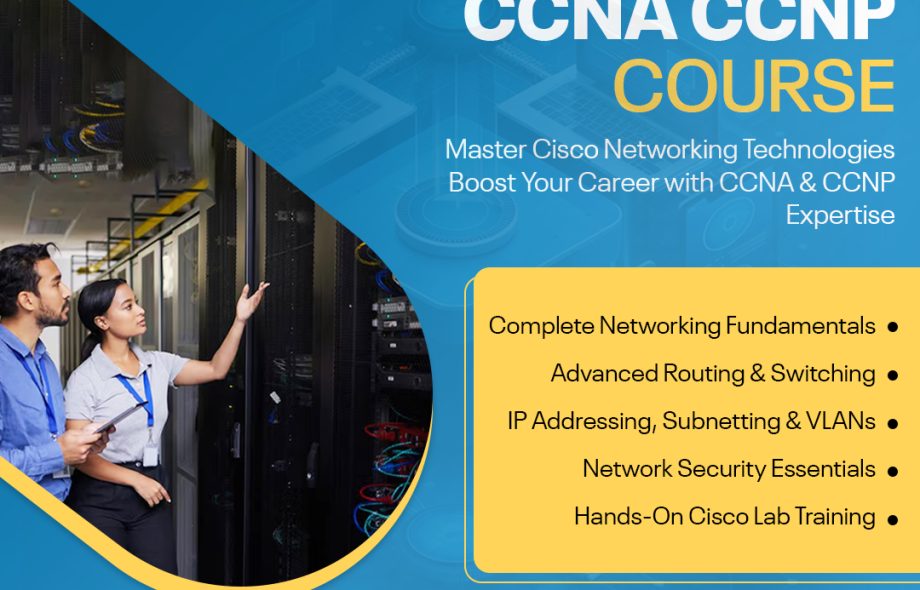
Networking is the foundation of most businesses today due to our increasing reliance on digital connections and the internet. Therefore, the need for networked systems has caused a significant increase in the number of qualified individuals seeking employment opportunities as network engineers. If you’re interested in becoming a network engineer, taking CCNA and CCNP courses are two of the best choices you can make to help you establish your career.
This guide provides an overview of CCNA and CCNP courses, including what they cover, their respective benefits, career options for those who hold these certifications, and how these courses work in conjunction with other IT certifications, such as the MCSA Course and Windows Administration Course.
What Are CCNA and CCNP Certifications?
Cisco Certified Network Associate (CCNA) and Cisco Certified Network Professional (CCNP) are globally recognized networking certifications offered by Cisco Systems.
- CCNA is an entry-level certification designed for beginners who want to understand networking fundamentals.
- CCNP is an advanced-level certification intended for professionals who want to master enterprise networking concepts.
Together, these certifications create a strong foundation and advanced skill set for aspiring network engineers.
Why Choose CCNA as a Starting Point?
CCNA is ideal for students, fresh graduates, and IT professionals transitioning into networking. It introduces you to the core principles required to design, manage, and troubleshoot networks.
Key Concepts Covered in CCNA:
- Networking fundamentals
- IP addressing and subnetting
- Routing and switching concepts
- LAN and WAN technologies
- Network security basics
- Wireless networking
- Network automation and programmability
The CCNA course helps you understand how data travels across networks and prepares you for real-world networking environments. It also builds a strong base that is essential before moving on to a Ccnp Course.
Advancing Your Career with a CCNP Course
Once you have foundational knowledge or some industry experience, the Ccnp Course takes your skills to the next level. CCNP focuses on enterprise-level networking solutions and complex network infrastructures.
What You Learn in a CCNP Course:
- Advanced routing protocols (OSPF, EIGRP, BGP)
- Enterprise network design
- Network security and troubleshooting
- Software-defined networking (SDN)
- Automation and network programmability
- High availability and scalability concepts
The CCNP certification proves your ability to handle large-scale networks, making you a valuable asset to organizations with complex IT environments.
How CCNA and CCNP Benefit Aspiring Network Engineers
CCNA and CCNP courses offer a structured learning path that aligns with industry requirements. Here’s how they help aspiring network engineers:
- Industry Recognition
Cisco certifications are globally respected and recognized by employers worldwide.
- Hands-On Practical Skills
These courses emphasize real-world labs and simulations, preparing you for live networking scenarios.
- Career Growth Opportunities
CCNA and CCNP certifications open doors to mid-level and senior networking roles.
- Higher Salary Potential
Certified professionals often earn higher salaries compared to non-certified peers.
Career Opportunities After CCNA and CCNP
Completing CCNA and CCNP courses can qualify you for several job roles, including:
- Network Engineer
- Network Administrator
- System Engineer
- IT Support Engineer
- Network Security Engineer
- Infrastructure Engineer
Professionals with CCNP certification, in particular, are often considered for leadership or specialized roles in enterprise networking environments.
Integrating Networking with System Administration Skills
While networking is a critical skill, modern IT roles often require knowledge beyond routers and switches. This is where certifications like the Mcsa Course and Windows Administration Course come into play.
Importance of the Mcsa Course
The Microsoft Certified Solutions Associate (MCSA) certification focuses on Microsoft technologies such as Windows Server, Active Directory, and system management. When combined with CCNA or a Ccnp Course, it creates a powerful skill set that covers both networking and server administration.
Benefits of a Windows Administration Course
A Windows Administration Course teaches you how to:
- Manage Windows Server environments
- Configure Active Directory and Group Policies
- Handle user accounts and permissions
- Monitor system performance and security
Network engineers often work closely with servers, and knowledge of Windows administration helps in troubleshooting, integration, and infrastructure management.
CCNA, CCNP, and MCSA: A Powerful Career Combination
Many organizations prefer IT professionals who understand both networking and systems. By combining:
- CCNA for networking basics
- Ccnp Course for advanced enterprise networking
- Mcsa Course for Microsoft server technologies
- Windows Administration Course for system management
you become a versatile IT professional capable of managing end-to-end IT infrastructure.
This combination significantly increases your employability and makes you suitable for roles such as Network and System Administrator, Infrastructure Engineer, or IT Consultant.
Who Should Enroll in CCNA and CCNP Courses?
These courses are ideal for:
- Students pursuing IT or computer science
- Fresh graduates looking to start a networking career
- System administrators wanting to move into networking
- IT professionals aiming for career advancement
- Professionals with MCSA or Windows Administration experience
Even if you already have experience in system administration, adding CCNA and CCNP certifications can expand your career scope.
Choosing the Right Training Institute
When selecting a CCNA or CCNP training provider, consider:
- Experienced and certified instructors
- Hands-on lab access
- Updated course curriculum
- Certification exam preparation support
- Placement assistance or career guidance
Quality training plays a crucial role in understanding complex networking concepts effectively.
Wrapping It Up!
Your path to success as a Network Engineer starts with certification and training programs from (CCNA) Cisco Certified Network Associate and (CCNP) Cisco Certified Network Professional Course, which provide structured and industry-specific Schooling/Training, allowing you to develop the Core Networking Skills you will use on the job. When combined with the (CCNP) Ccnp course from Cisco, (MCSA) Microsoft Certified Solutions Associate certification program and/or (Windows) Microsoft Windows Administration Course, you will also be able to develop a Comprehensive Knowledge of both Networking and System Administration.
When you combine these courses, not only will you enhance your Technical Skills you will have a significant advantage over those who do not have these Technical Skills in today’s Competitive IT Job Market. Additionally, by earning these Certifications, you will also be investing in a Stable, Rewarding, and Future-Proof Career.
 :
https://pin.it/QTZUS3lg3
:
https://pin.it/QTZUS3lg3