

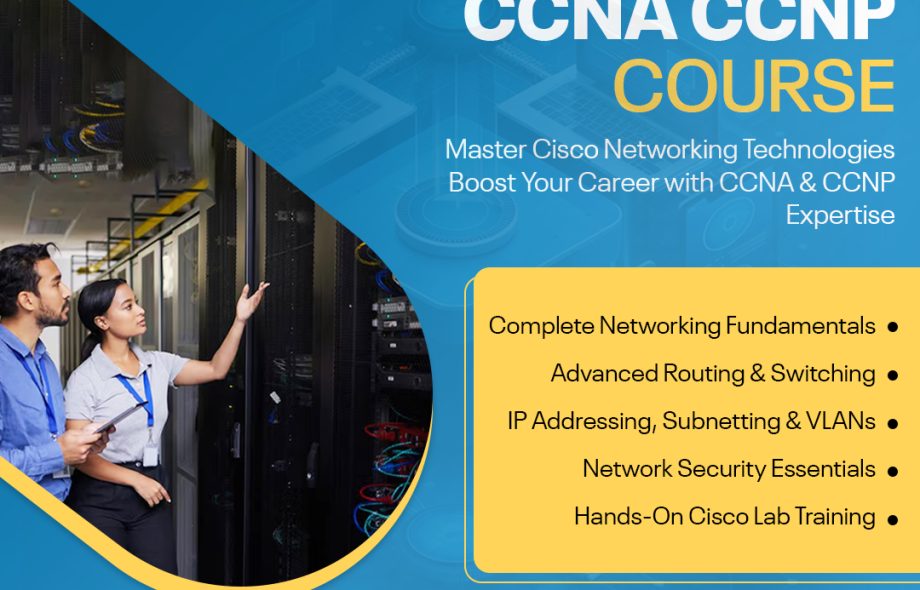
Obtaining a Cisco Certified Network Professional (CCNP) certification is a significant boost in your career today, as the world of IT networking continues to grow and change rapidly. With the CCNP certification, you will have demonstrated an advanced understanding of the concepts and practices involved in designing, implementing, and troubleshooting advanced networks, regardless of whether your goal is to further your career in networking or move into security or other enterprise solutions.
Preparing for the CCNP exams requires not only extensive knowledge but also a solid foundation of skills that are transferable to real-life situations. Therefore, if you start with a basic understanding of Cisco Networking (Ccna Ccnp), then developing a successful study plan will require careful planning, dedication, and the utilization of appropriate study materials.
In this article, we will examine how to prepare effectively for your CCNP exams, and we will explore how additional training programs, such as the MCSA Course or Windows Administration Course, can further develop your IT skill set.
Understanding the CCNP Exam Landscape
Before you even open a textbook, it’s crucial to grasp what the CCNP exams entail. Cisco offers several CCNP tracks, including Enterprise, Security, Data Center, Service Provider, and Collaboration. Each track has a core exam and concentration exams, with the core focusing on broad enterprise networking concepts and the concentrations delving into specialized areas like automation or wireless networks.
Candidates must be aware that the exams are challenging, lasting typically two hours and consisting of 90-110 questions in multiple formats (multiple-choice, drag-and-drop, simulation, lab-style). The pass mark is typically around 825 out of 1000 points; however, Cisco do not publish the precise threshold for passing an exam. To succeed in passing a CCNP exam, you should first consult the Cisco website for the official Cisco Examination Blueprints. These blueprints give a list of the topics you will need to be familiar with to take the certification test, such as Network Fundamentals, IP Services, Security, Automation, and Architecture, which are areas that have been built on, in part, from the materials you have learned in the CCNA and CCNP Course Series.
A common mistake made by candidates preparing for the CCNP exam is believing that it does not require as much depth of knowledge as an entry-level certification. The CCNP exam will require you to have a practical understanding of the technology and configuration of it (example: VLAN configuration, OSPF routing, and/or BGP protocol configuration), and those skills can be learned during a hands-on training environment or on the job. A candidate with a background in courses such as the MCSA Course offers Microsoft Server Technology will have a basic understanding of integrated systems, but will still need to familiarize themselves with Cisco tools to utilize that knowledge effectively.
Building a Strong Foundation: Start with the Basics
Effective preparation begins with a solid base. If you haven’t already, ensure you’ve mastered the prerequisites. The Ccna Ccnp Course pathway is designed this way for a reason—CCNA covers essentials like network access, IP connectivity, and basic security, which are foundational for CCNP. Cisco recommends having CCNA-level knowledge or equivalent experience before tackling CCNP.
If you’re transitioning from other IT domains, consider how related courses can strengthen your foundation. For example, a Windows Administration Course can provide insights into server management, Active Directory, and group policies, which often intersect with network administration in enterprise settings. Similarly, the Mcsa Course, which emphasizes Windows Server skills, can help you understand how networking protocols interact with operating systems. Integrating these can make you a more well-rounded professional, as CCNP often involves hybrid environments where Cisco devices connect to Microsoft servers.
To solidify your basics, dedicate the first few weeks of your study plan to reviewing core concepts. Use free resources like Cisco’s Networking Academy or YouTube channels from certified instructors. Quiz yourself daily on subnetting, OSI models, and routing protocols. Remember, skipping this step is like building a house on sand—your advanced knowledge will crumble under exam pressure.
Curating the Best Study Resources
No preparation is complete without the right materials. Cisco’s official learning platform offers e-learning modules, books, and practice exams tailored to each CCNP track. The “CCNP Enterprise Certification Study Guide” series by Cisco Press is a must-have, covering everything from ENCOR (core exam) to specialized topics in ENARSI or ENSDWI.
Supplement these with third-party resources for diverse perspectives. Websites like Boson or MeasureUp provide realistic practice tests that mimic the exam interface. For video-based learning, platforms like CBT Nuggets or INE offer in-depth courses with lab simulations. If you’ve taken a Mcsa Course, you might appreciate how these resources draw parallels to Microsoft ecosystems, helping you visualize Cisco-Microsoft integrations.
Don’t overlook community forums. Sites like Reddit’s r/ccnp or Cisco’s own community forums are goldmines for tips, study groups, and troubleshooting advice. Engage actively—answering others’ questions reinforces your knowledge. Additionally, if your career path includes system administration, weaving in elements from a Windows Administration Course can help you prepare for scenarios where network pros must collaborate with sysadmins.
Books aren’t dead either. “CCNP and CCIE Enterprise Core ENCOR 350-401 Official Cert Guide” by Brad Edgeworth is comprehensive, with over 800 pages of detailed explanations, diagrams, and review questions. Pair it with flashcards apps like Anki for spaced repetition, ensuring long-term retention.
Hands-On Practice: The Key to Mastery
Theory alone won’t cut it for CCNP. The exams heavily feature labs where you configure devices in virtual environments. Invest in hands-on practice early and often. Cisco’s Packet Tracer is free and excellent for beginners, allowing you to simulate networks without hardware.
For more advanced setups, consider GNS3 or EVE-NG, which support real Cisco IOS images. Build labs from scratch: configure a multi-site enterprise network with redundancy, implement QoS policies, or set up VPNs. If you’re familiar with virtualization from a Windows Administration Course, you’ll find these tools intuitive, as they often run on hypervisors like VMware.
Aim for at least 2-3 hours of lab time daily. Record your sessions to review mistakes.Remember, the goal is fluency—be able to troubleshoot a flapping OSPF adjacency or optimize BGP peering without hesitation.
If your background includes the Mcsa Course, leverage that by practicing hybrid labs, like connecting Cisco routers to Windows servers via DHCP or DNS. This not only prepares you for CCNP but also for real jobs where multi-vendor skills are prized.
Time Management and Study Strategies
With CCNP’s breadth, time management is paramount. Create a study schedule spanning 3-6 months, depending on your experience. Break it into phases: foundation review (1-2 weeks), topic deep dives (4-8 weeks), practice exams (2-4 weeks), and final review (1 week).
Use techniques like Pomodoro—25 minutes focused study followed by 5-minute breaks—to maintain productivity. Track progress with a journal: note weak areas and revisit them. Incorporate active recall by teaching concepts to a study partner or even recording explanations for yourself.
Avoid burnout by balancing study with rest. Exercise, sleep, and healthy eating fuel your brain. If you’re juggling work, prioritize high-impact activities like labs over passive reading.
Incorporate mock exams weekly. Cisco’s practice tests are gold, but third-party ones from ExamCram or Transcender add variety. Analyze results: if you’re weak in automation, dive into Python scripting for networks—a skill that complements the programming elements in some Ccna Ccnp Course modules.
Overcoming Common Challenges
Many candidates struggle with motivation or specific topics like automation and programmability, which are newer to CCNP. Combat this by setting milestones, like completing a chapter with a reward. For tough subjects, seek specialized resources—INE’s automation courses are excellent.
Anxiety on exam day? Practice under timed conditions. Visualize success and remember your preparation. If you’ve explored related fields via a Mcsa Course or Windows Administration Course, draw confidence from that broader knowledge base.
Diversity your study to avoid silos. Understanding how CCNP skills apply in Microsoft-heavy environments can make abstract concepts concrete.
Staying Updated and Post-Exam Tips
Cisco certifications evolve, so stay current. Follow Cisco’s blog and Twitter for updates. After passing, maintain your cert with continuing education credits—attend webinars or pursue higher levels like CCIE.
Networking (the human kind) is key. Join LinkedIn groups or local Cisco user groups. Your CCNP, combined with skills from a Windows Administration Course, positions you for roles like network architect or IT consultant.
Wrapping It Up!
The process of getting ready to take the CCNP exam takes time like running a marathon; just like in a marathon, there are several steps the student must go through to be successful. The steps you should follow for CCNP exams include creating a good foundation for both the Ccna and Ccnp course paths; finding great study materials; focusing on practical application; properly managing your time; and working through challenges. In addition, don’t underestimate the value of additional education from courses such as an MCSA course or classes about Windows Administration, which will help further develop your knowledge of integrated information technology environments.
 :
https://pin.it/QTZUS3lg3
:
https://pin.it/QTZUS3lg3