

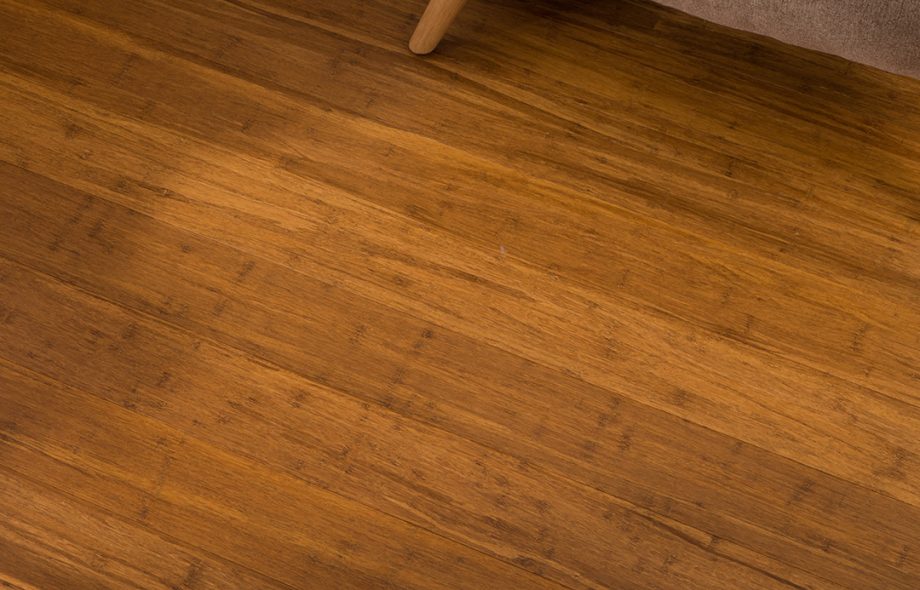
Bamboo flooring has become a widely recognized material in both residential and commercial construction, and much of its performance depends on the species used during manufacturing. Among the dozens of bamboo species available, moso bamboo stands at the center of flooring production. As someone working directly in bamboo flooring technology and production, I’ve spent years observing how raw material variations influence stability, hardness, color, machining quality, and long‑term performance.
Understanding the differences between moso bamboo and other species sheds light on why factories, importers, and builders consistently select it as the preferred option for engineered and strand woven flooring.
Why Moso Bamboo Is the Preferred Raw Material
Moso bamboo (Phyllostachys edulis) is native to China’s subtropical regions and is characterized by its large diameter, thick culm walls, and long fiber strands. These traits give it mechanical properties that fit flooring production better than most other species.
A mature moso culm typically reaches heights of 12–20 meters with a diameter of 8–12 centimeters, providing ample usable material for strip and fiber processing. Its fiber density increases in the lower and middle culm sections, creating a reliable raw material base for high‑density products such as strand woven flooring.
Moso’s cell structure combines strength with controlled flexibility, which helps minimize splitting during slicing, milling, or pressing. This consistency greatly benefits factories aiming to maintain stable product quality across large production batches.
Comparing Moso Bamboo with Other Commonly Used Species
Although more than a thousand bamboo species exist worldwide, only a limited number appear in the flooring marketplace. Several species may occasionally enter local or regional flooring production, but they rarely match the scalability and stability that moso offers.
The following sections outline how moso differs from other species encountered in manufacturing.
1. Mao Bamboo (Phyllostachys bambusoides)
Mao bamboo shares several similarities with moso and is sometimes used in flooring, though less frequently. Its culm diameter is slightly smaller and its wall thickness can be inconsistent across harvesting regions.
Key differences include:
Slightly lower fiber density, which affects hardness
Higher variability in moisture behavior
Less stability during carbonization
While mao bamboo performs well in certain applications, it generally lacks the uniformity needed for large‑scale flooring production. Factories that prioritize consistency typically choose moso because it reduces color variation during carbonization and maintains dimensional accuracy under heavy pressure.
2. Guadua (Guadua angustifolia)
Guadua is primarily grown in Central and South America and is known for its impressive structural strength. However, it is rarely used for flooring.
Key differences:
Natural fiber arrangement supports structural loads but is less suitable for milling into uniform strips
Higher starch content increases susceptibility to insect activity
Variability in density complicates controlled pressing cycles
Guadua works well in building structures such as beams and outdoor elements, but flooring manufacturers generally avoid it due to its unpredictable behavior in strand woven production.
3. Tonkin Bamboo (Pseudosasa amabilis)
Tonkin is best known for use in fishing rods, decorative items, and smaller craft projects. It has a narrow diameter and thin walls, which restricts its use in flooring.
Compared with moso:
Culm diameter is significantly smaller, resulting in lower yield per culm
Fiber length is shorter, reducing strand woven strength
Moisture distribution across nodes is harder to control during drying
Tonkin’s characteristics make it a specialty material rather than a flooring material.
4. Dendrocalamus asper
Often grown in Southeast Asia, Dendrocalamus asper reaches impressive sizes and is valued for construction uses. Its very thick culm walls make slicing into strips more challenging, and its fiber composition differs noticeably from moso.
Differences include:
Higher silica content, which wears down blades more quickly
Inconsistent fiber density, especially near the inner wall
Greater variation in culm maturity across plantations
While strong, it lacks the fine balance between density and workability that moso offers, making it less appealing for flooring lines that require precise milling and tight tolerance control.
5. Other regional bamboo species
In certain regions, manufacturers experiment with smaller local species, typically for low‑cost or craft‑grade products. These species generally produce flooring with reduced stability, higher color variation, or less hardness than moso.
Their limitations usually include:
Shorter fiber lengths
Thin culm walls
Rapid moisture absorption
Poor results in carbonization and strand weaving
This explains why, despite the wide variety of bamboo types globally, only moso has gained significant market share in flooring.
Fiber Density and Hardness: A Major Performance Divider
One of the main technical advantages of moso bamboo is its fiber density. Moso’s fibers are long, dense, and evenly distributed through the culm wall. This consistency allows strand woven flooring to reach high hardness values without becoming brittle.
Other species generally have either:
Insufficient fiber density for durable flooring
Density concentrated too close to the outer wall
Irregular fiber orientation that complicates milling
In moso, the balance between fiber density and parenchyma cells provides the ideal structure for pressing. When fibers are shredded and compressed with resin, the resulting strand woven material performs extremely well under wear and impact.
Moisture Behavior and Dimensional Stability
Controlled moisture behavior is essential for flooring stability. Moso bamboo, when managed correctly during kiln drying and conditioning, provides consistent equilibrium moisture content that helps reduce expansion and contraction.
Compared with other species:
Moso releases moisture more uniformly during drying
Carbonization depth is easier to control
Post‑press moisture distribution is more stable
Other bamboos often show unpredictable shrinkage, node cracking, or internal stress buildup during pressing. This inconsistency leads to cupping, bowing, or gaps after installation.
Yield and Processing Efficiency
Flooring factories rely on predictable yield from each culm. Moso’s combination of diameter, wall thickness, and culm height provides strong production efficiency.
The economically relevant advantages include:
High usable material rate
Fewer defective strips
Stable milling performance
Reduced waste compared with smaller species
Other species produce fewer usable strips per culm, increasing production cost and reducing consistency.
Color and Carbonization Response
Color uniformity is important for both natural and carbonized bamboo flooring. Moso reacts predictably to heat, producing stable caramel or coffee tones without excessive softening when managed properly.
Other species often show:
Uneven color during carbonization
Greater risk of fiber weakening
Higher levels of brittleness or discoloration
The combination of color stability and mechanical performance is one reason manufacturers continue refining moso carbonization techniques while rarely using alternative species.
Surface Finishing and Coating Performance
Moso bamboo retains finishes well due to its uniform texture and fiber structure. UV‑cured coatings bond reliably across the surface, helping the flooring achieve abrasion resistance and long‑term durability.
Other species may have:
Higher silica content that interferes with coating adhesion
Surface pores that absorb stain unevenly
Texture variations that shift during finishing
These differences make moso the more predictable option for producing flooring with matte, satin, or brushed finishes.
Sustainability and Availability
Moso is cultivated extensively across China in managed plantations. The consistent harvesting cycles supply factories with predictable raw material year‑round, which stabilizes production and pricing.
Other species:
Are not cultivated at large scale for flooring
Often grow in regions with limited harvesting regulation
Lack the plantation infrastructure needed for reliable industrial use
Moso’s availability supports long‑term manufacturing planning and reduces sudden supply fluctuations.
Why Flooring Manufacturers Continue to Choose Moso
After years working with bamboo flooring production, several reasons consistently explain why moso maintains its leading role:
Reliable mechanical strength
Predictable carbonization behavior
Long fiber strands suitable for strand woven technology
Strong stability after proper kiln drying
High yield rates and efficient processing
Consistent surface quality for finishing
Established supply chains
Other species may serve niche applications, but none match moso’s overall balance of strength, stability, processing efficiency, and aesthetic adaptability.
Moso bamboo remains the foundation of the modern bamboo flooring industry not by accident, but through a combination of natural characteristics and well‑developed manufacturing practices. Its properties continue to meet the performance demands of global markets, making it the most suitable and dependable species for producing high‑quality bamboo flooring across a wide range of styles and constructions.
 :
https://www.bambooindustry.com/
:
https://www.bambooindustry.com/